
Hello and Assalam-o-Alaikum!
Hope you are doing well today. I am back with another big story, and this one is about something I find very interesting — drones, our army, and a new deal with an American company. After reading three different news reports about it, let me explain everything to you in very simple words, the way I like to understand things myself.
What Happened? The Short Version
A drone company from America called PowerUS has signed a deal with the Pakistan Army. The deal is called an MoU, and it also includes a first small order for drone-related equipment. The company’s co-founder, Brett Velicovich, first shared the news with Reuters, and Dawn and The News also reported it.
First, What Is an MoU? (Very Simple Explanation)
MoU means “Memorandum of Understanding.” Big words, but the idea is simple. It is like a handshake on paper. Two sides write down that they agree to work together. It is not the final full contract, but it is a serious first step. It says: we trust each other, and we want to do business together.
In this case, the MoU also came with an “initial order.” That means the Pakistan Army has already placed a first small order for the company’s products. When someone gives you a small first order, it usually means they want to test your work before giving you bigger orders later.
Who Is PowerUS?
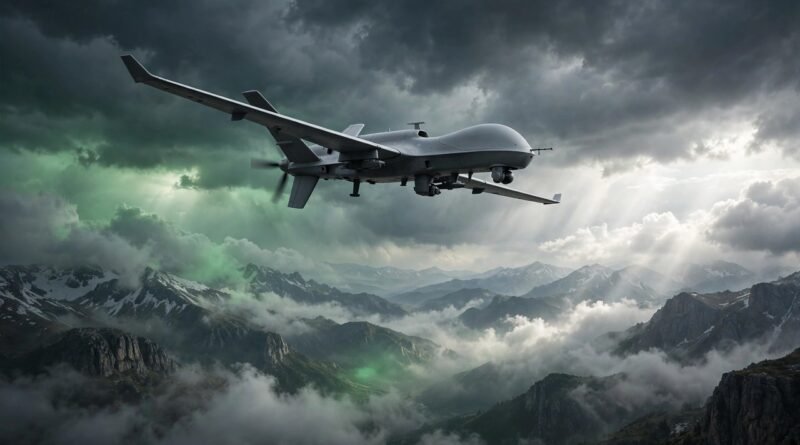
PowerUS is an American company that makes drones — flying machines without a pilot inside. They make two kinds: aerial drones (that fly in the sky) and maritime drones (that work near or on water). They use their drones for military work and also for industrial work, like checking big buildings or watching large areas.
Andrew Fox, who is its chief executive, and Brett Velicovich, who is its co-founder, started the company. Velicovich is the one who spoke to Reuters about this deal from Islamabad.
What Did the Company Say About the Deal?
Velicovich said something very interesting: “Today we signed a very important MOU. As part of that MOU, we received an initial order for power systems.”
But when reporters asked him for more details — what exactly will Pakistan get, and how much money is involved — he did not answer. He said the details are secret because of security reasons, and the price is confidential. This is normal for army deals. Countries do not share such details openly, and that is understandable.
What we do know is that the deal falls in the category of “unmanned aerial systems” — a formal name for drone technology.
The Army Meeting at GHQ
On September 16, 2026, Velicovich led a PowerUS team to the General Headquarters (GHQ) in Rawalpindi. There, they met Field Marshal Asim Munir, who is Pakistan’s Chief of Defence Forces and Chief of Army Staff.
According to ISPR (the army’s media wing), they talked about three things: defence procurement (buying defence equipment), production (making things), and long-term capacity building (getting stronger over time). Interestingly, the ISPR statement did not mention the MoU itself — the MoU news came from the company side through Reuters.
The Trump Connection (This Part Needs Careful Reading)
Now here is the part that made this story travel around the world. PowerUS is about to merge with another company called Aureus Greenway Holdings, which two sons of US President Donald Trump — Donald Trump Jr. and Eric Trump — back. The two companies say the merger should be complete in early October.
According to US official papers, the Trump sons own a share in Aureus through an investment fund called American Ventures. After the merger, American Ventures will likely own about 9.9% of the combined company.
Now, does this mean the Trump family pushed this Pakistan deal? The company says no. Andrew Fox said they give their contracts on merit and the Trump sons have “no involvement on the business side.” A spokesman for Donald Trump Jr. said he is only a passive investor — meaning he put in money but does not run anything — and that he had “no prior knowledge of this deal.” The White House also said there are “no conflicts of interest.”
I am sharing both sides with you because that is what I always try to do. You read, you think, and you decide what you believe.
Why Is This Deal Happening Now?
To understand this, we need to look at the bigger picture. Relations between America and Pakistan are getting warmer under President Trump, after many difficult years. Trump has publicly praised Field Marshal Munir. At the same time, Pakistan has been working on many economic, financial, and defence steps to build a stronger relationship with the United States. I actually wrote about one such step recently — the Prime Minister’s London visit to meet global banks — and this drone deal feels like part of the same bigger story. You can follow more such stories in our News and Latest sections.
What Does “Building Technology in Pakistan” Mean?
This is the part I found most hopeful. Velicovich said PowerUS is exploring ways to “potentially build technology in Pakistan.” And he said their goal is a “joint technology relationship” — pairing the best American technology with best Pakistani technology.
In simple words: this might not just be about buying drones. It might be about making things together, in Pakistan, with Pakistani people learning the technology. Andrew Fox also said something honest: Pakistan’s private defence sector is “emerging but still not mature,” which means it is growing but still new. He said this leaves room for American companies to move faster — and to help build.
If this truly happens, it could mean jobs, learning, and stronger local industry. That is the part I will be watching closely.

My Honest Take
Let me tell you what I really think, in the simplest words I can find.
The good side: Drones are the future of defence all over the world. Every strong country is investing in them. If Pakistan gets good drone technology — and especially if we learn to build it ourselves — that makes our country stronger and safer. A first small order is how big partnerships usually begin.
The careful side: An MoU is a first step, not a final deal. People sign many MoUs in this world, and not all of them turn into something big. Also, when the American president’s family has links to a company — even indirectly — people will ask questions. The company has answered those questions, but it is okay for us to keep watching.
What I will watch next: Two things. First, does the merger with Aureus complete in October as planned? Second, do we hear about bigger orders or, even better, a factory or training programme in Pakistan? Those will tell us if this was the start of something real — and I’ll break it down for you here at Pak Unfiltered when it happens.
What do you think about this deal — a smart move for Pakistan’s future, or just another headline? I would truly love to know your thoughts. If you have any question, or want me to explain another story in simple words, please reach out through our Contact Us page.
Take care, and I will see you in the next story. — Maryam


