
Hello and Assalam-o-Alaikum!
I hope you are doing well. Quick question: how many apps do you open every day? WhatsApp, YouTube, the bank app, the food app, the maps app… Now imagine a future where you never open an app again — your device just knows what you need and does it for you. Amazon’s top devices boss says that future is coming. Let me explain in simple words.
What Happened? The Short Version
On October 15, 2026, at the TechCrunch Disrupt conference in San Francisco, Amazon’s devices chief Panos Panay shared his big vision: the next generation of users will stop using apps. Instead, smart AI devices working quietly in the background will understand what you need and just get it done. On the same day, Amazon launched two new AI wearable devices — called Bee — that listen to your day and turn your conversations into reminders and to-do lists. TechCrunch and Gizbot covered the story, with device details from Reuters. For more tech stories, visit our Top Picks and Latest sections.
Who Is Panos Panay?
Panos Panay is Amazon’s senior vice president of Devices, Alexa and Leo — basically the boss of all Amazon gadgets (Echo speakers, Fire TV, and now Bee). Before Amazon, he spent 19 years at Microsoft running the Surface business (their laptops and tablets). So when he talks about the future of devices, the tech world listens carefully.
What Does “No More Apps” Actually Mean?
Let me make it very simple with an example. Today: you want to order food. You remember to open the food app, search for biryani, pick a restaurant, pay, and track the rider. Panay’s future: you just say (or your device just knows) “I am hungry,” and food gets ordered — no app opened, no menus tapped.
His idea is called “ambient computing” — technology that sits quietly in the background like air, instead of demanding your attention. As he put it, devices should “just understand what I need” so you can “stay more present” — spend time with people instead of staring at screens.
And do not worry — he was clear that the smartphone is NOT going away. These new devices will work with your phone, not replace it.
Meet Bee: Amazon’s New Listening Devices
Amazon bought a small AI startup called Bee last year, and now its first products are here:
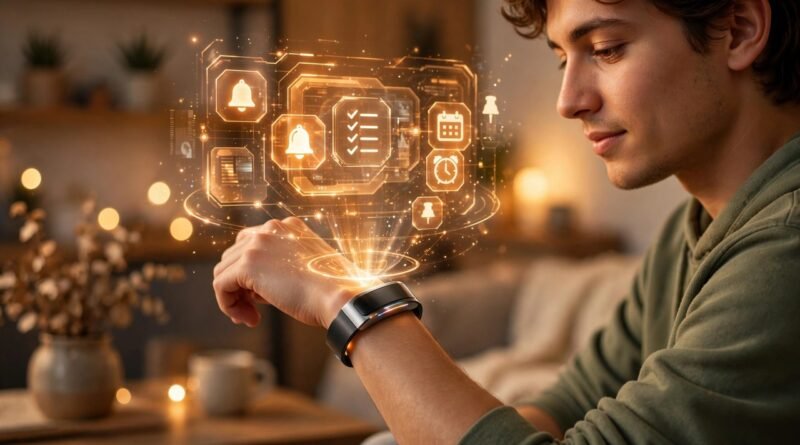
1. Frontier — $75: A bracelet you wear on your wrist, which can also be detached and worn as a pendant (locket).
2. Eclipse — $100: A card-sized device that sticks magnetically to the back of your phone.
Both devices listen to your conversations through the day and turn them into to-do lists, reminders, and notes. Forgot what your friend asked you to bring? Bee remembers. Promised someone you would call back? Bee reminds you.
But Wait — Is It Not Spying on Me?
This is the big question, and I will be honest with you. A device that listens all day sounds scary. Here is what Amazon promises:
— Your voice is processed instantly and the audio is deleted — not stored.
— Written notes are encrypted with keys that stay on your device — Amazon staff cannot read them unless you share them.
— You decide when it listens — you can turn it off and delete old notes anytime.
— Data is kept for 14 days (longer only if you pay $12/month).
But remember: Amazon faced criticism in 2019 when it turned out humans were listening to Alexa recordings, and there is an ongoing court case about it. Amazon denies wrongdoing. So — trust, but verify. A listening device is only as private as the company behind it.
Has This Been Tried Before?
Yes — and it failed! Two famous flops: the Humane AI Pin (a brooch with AI) and the Rabbit R1 (a tiny orange gadget). Both promised to replace your phone’s apps, and both disappointed. Panay’s answer: those failed because they were not useful enough. His bet is that Bee will succeed by being genuinely helpful, not just futuristic.

What Does This Mean for Pakistan?
These devices are launching in America first, and they may take years to reach Pakistan officially — if ever. But the idea matters for us: our lives are also drowning in apps. The dream of technology that quietly helps instead of constantly demanding attention is universal. And the privacy questions — who hears my conversations? — matter even more in a country where digital rights are still developing.
My Honest Take
The good side: The vision is beautiful — less screen time, more real life. A device that remembers your promises and handles small tasks could genuinely reduce stress.
The careful side: “Your AI remembers everything you said today” is also the plot of every dystopia movie ever. Convenience always comes with a privacy price — make sure you choose what that price is, not the company.
What I will watch: whether people actually buy Bee, and whether the privacy promises hold up in the real world. Here at Pak Unfiltered, I will keep explaining the future simply — the exciting parts AND the scary parts.
Would you wear a device that listens to your whole day? Tell me honestly! And if you want me to explain any tech story in simple words, reach out through our Contact Us page.
Take care! — Maryam


