
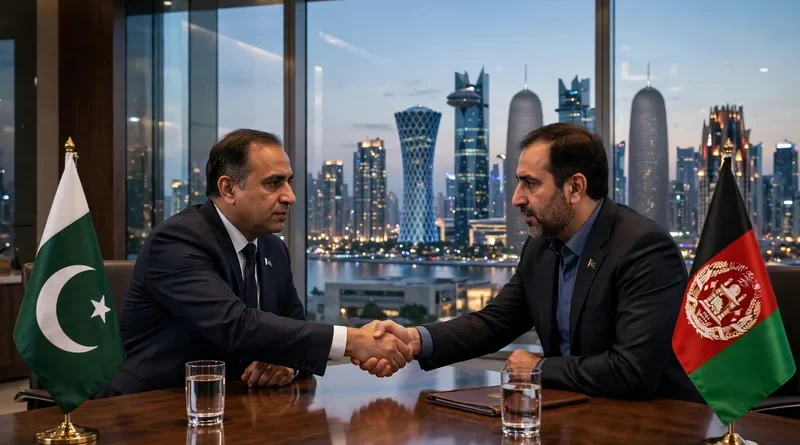
Assalam-o-Alaikum, my dear readers! I hope you are all doing well and had a calm weekend. Kal subah nashtay par khabar suni to dil ko thori si rahat mili — Doha mein Pakistan aur Afghanistan ke darmiyan jung bandi ka muahida ho gaya hai! Dekhiye, mein sifarat kari ki mahir nahi — bas aik aam Pakistani hoon jo aman ki khabar sun kar khush hoti hai, kyunki sarhadon par aman ho to hamare jawano ke ghar walon ko bhi sakoon milta hai. To aaiye, is poori khabar ko aasaan lafzon mein samajhte hain.
Doha Talks Pakistan Afghanistan: What the Agreement Says
On Sunday, October 18, 2026, Qatar’s Ministry of Foreign Affairs announced that Pakistan and Afghanistan have agreed to an immediate ceasefire. Defence Minister Khawaja Asif led Pakistan’s team in the talks, and he confirmed the news on X soon after.
Khawaja Asif said that the ceasefire agreement has been signed. He said that terrorist attacks from Afghan soil on Pakistani soil will stop right away. He also said that both countries will respect each other’s land and borders. This is the main point of the whole deal.
He thanked Qatar and Turkiye for their help. Both countries worked as mediators, which means they helped Pakistan and Afghanistan talk and agree. This is called mediation, and it is a big and kind job.

Who Sat at the Table in Doha
The first round of talks happened on Saturday in Doha. Qatar’s intelligence chief, Abdullah bin Mohammed Al-Khalifa, hosted the meeting. This means he opened the doors and made sure the talks could happen in a calm place.
The Pakistani team was led by Defence Minister Khawaja Asif. Senior security officials went with him. This shows that Pakistan took the talks very seriously.
The Afghan team was led by their Defence Minister, Mullah Mohammad Yaqoob. So both countries sent their top defence leaders. When top leaders meet face to face, it means the matter is very serious and both sides want peace.
Qatar and Turkiye sat in the middle as mediators. They did not take any side. They only helped the two countries reach a fair deal.
Why These Talks Happened Now
You may ask why these talks happened now. The answer is sad but simple. In the past few weeks, there was heavy fighting along the Pakistan-Afghanistan border. Dozens of people were killed and hundreds were hurt in the violence. Many reports called it the worst fighting between the two countries since the Taliban took power in Kabul in 2021.
Pakistan says that the Afghan Taliban government is letting a group called the TTP use Afghan land to attack Pakistan. The TTP is a banned group, and Pakistan calls its attacks terrorism. The Taliban government in Kabul denies this and says it does not allow such attacks.
Earlier, both sides agreed to a short 48-hour ceasefire so they could talk. That short pause was then extended so the Doha talks could finish. Now this new agreement is bigger and stronger than that short pause.
Before the talks, Pakistan’s Foreign Office had said something very clear. It said Pakistan does not seek escalation. This means Pakistan does not want to make the fighting bigger. But it also said the Afghan side must take real action against terrorist groups. So Pakistan wants peace, but it also wants safety for its people.
What Both Sides Promised
Let me tell you in simple points what each side promised.
First, both sides promised an immediate ceasefire. This means no more firing, no more attacks, and no more airstrikes from either side. The guns must go quiet.
Second, both sides promised to respect each other’s territorial sovereignty. This is a big phrase, but it is simple. It means: your land is your land, and my land is my land. No one will cross into the other’s land to fight.
Third, Afghanistan promised that its soil will not be used for terrorist attacks inside Pakistan. Pakistan’s main demand from day one was this. The agreement puts it in clear words.
Khawaja Asif also gave a warning with the promise. He told Dawn newspaper that the ceasefire depends on the Taliban stopping attacks. He said that anything coming from Afghanistan would be a violation of the agreement. So the deal is clear: no attacks, no violation.
He also spoke to Al-Jazeera Arabic and said both nations know they must stop terrorism. He warned that failure to do so could hurt peace in the whole region. This shows Pakistan is hopeful but also careful.
What Happens Next
The story of the Doha talks Pakistan Afghanistan does not end in Doha. The two countries agreed to meet again in Istanbul on October 25. In that meeting, they will discuss the remaining issues in detail. The main job in Istanbul will be to build a permanent mechanism for peace. A mechanism is like a system or a set of rules that keeps the peace working for a long time.
Deputy Prime Minister and Foreign Minister Ishaq Dar also spoke about the deal. He called it a first step in the right direction and thanked Qatar and Turkiye too. He said the next meeting should build a clear monitoring system. A monitoring system means someone will watch and check that both sides follow the deal.
This is important because a ceasefire is only a promise on paper at first. It becomes real when both sides follow it every day. The people living near the border have suffered the most from the fighting. For them, this deal can mean quiet nights and safe days again.
Why This Matters for Pakistan
This deal matters for three big reasons. First, it can save lives. No more soldiers and civilians dying in border fights is a huge win for every family.
Second, it can open the door for trade. When borders are calm, trucks can move, markets can work, and goods can reach people on both sides. Peace is good for business and jobs.
Third, it shows that talks can work. Even after weeks of fighting, both sides chose to sit and talk. That is always better than more war. Here at Pak Unfiltered, we believe peace is the best news of all.
I will keep watching this story for you. If the Istanbul meeting on October 25 brings more news, I will explain it here in the same simple words.
If you want more background, you can read my earlier story about the Kurram border firing on Pak Unfiltered: Pakistani Army Responds to Firing at Kurram Border. For the history of this long border, the Durand Line page on Wikipedia is a good place to start.
Take care, my dear readers. If you have any questions about this story, please visit our Contact Us page at https://pakunfiltered.com/contact-us/ and ask me anything. I love hearing from you!


