
Hello my dear friends! How are you all doing today? I hope you are all safe and well. Aise waqt mein jab Mashriq-e-Wusta se roz nai khabrein aati hain, ek dost ne mujh se kaha: “ye sab sun kar ghabrahat hoti hai.” Ye ehsaas to har kisi ka hai. Dekhiye, mein kisi foj ya siyasat ki mahir nahi — bas aik aam Pakistani hoon jo aman ki dua mangti hai, aur khabar ko aasaan lafzon mein samajhna chahti hai. To aaiye, egypt saudi arabia houthis ki is kahani ko aasaan lafzon mein samajhte hain.
Egypt Saudi Arabia Houthis: What Sisi Actually Said
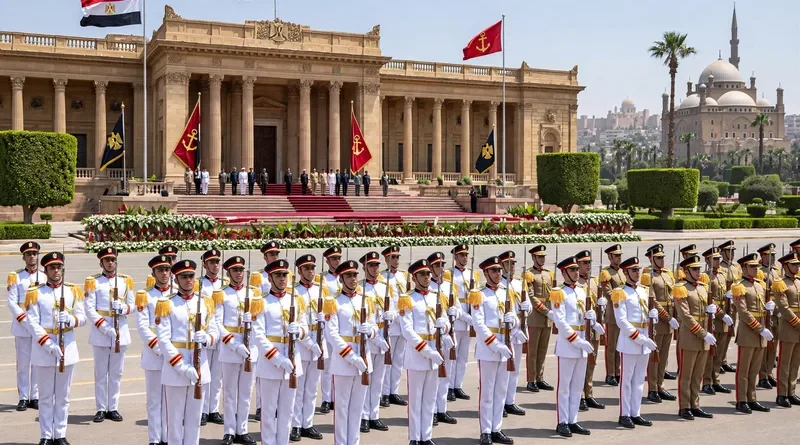
On Saturday, Egypt’s President Abdel Fattah al-Sisi spoke at a graduation ceremony of the Egyptian Military Academy in Cairo. He said Egypt is ready to take “any measure” to defend Saudi Arabia from attacks by Yemen’s Houthi fighters, if Saudi Arabia asks for help.
He also said, “It is inconceivable that we would allow Saudi Arabia, its security or stability to be harmed.” These are very strong words from a president.
But he added something important too. He said Egypt is “not looking for a role to play” in regional fights. And he said, “I’m not talking about fighting anyone or attacking anyone. We are speaking only about defence.” So his promise is about defence, not attack. This is an important difference.
He also said that any Egyptian help would need approval from Egypt’s parliament first. He asked parliament to hold an emergency meeting so it can give that approval if Saudi Arabia asks for help.
Why Does Egypt Care About Saudi Arabia So Much?
You may ask: why is Egypt making such a big promise? There are three main reasons.
First, the two countries are very close friends. Saudi Arabia and other rich Gulf states gave Egypt billions of dollars in aid, bank deposits, and investments after 2013. They are strong economic partners, and Egypt does not want to lose that friendship.
Second, Egypt joined the Saudi-led military group in Yemen back in 2015. But Egypt’s role was mostly about keeping Red Sea ships safe, not fighting on the front lines. So Egypt already has a history of standing with Saudi Arabia.
Third, this fight is hurting Egypt’s own money. Egypt’s foreign minister said the Suez Canal has lost about $11 billion since the Houthis started attacking ships in 2023. The Suez Canal is one of Egypt’s biggest sources of income. Ships pay money to pass through it. When ships stay away because of attacks, Egypt loses money. So a safe Red Sea matters a lot to Egypt.

The Latest Attacks on Both Sides
Now let us look at what happened on the ground this weekend, because both sides faced attacks.
On Saudi Arabia’s side: the Saudi-led group said it stopped and destroyed four drones on Saturday. The drones were over Riyadh, the Eastern Province, and the south of the kingdom. A spokesman named Turki al-Malki said the drones were “intercepted and destroyed.” And this morning, the group said it stopped two ballistic missiles fired by the Houthis. People in Riyadh even got an “aerial threat” alert on their phones. You can imagine how scary that must feel.
Saudi Arabia has been stopping Houthi missiles and drones for weeks now. I explained the earlier attacks in my earlier article about Saudi Arabia stopping missiles, if you want the full background.
On the Houthi side: Houthi media said Saudi air strikes overnight killed at least 12 people in Yemen, including three children. They said strikes on homes in the city of Taiz killed nine people and hurt 16 more. And strikes in Dhamar killed three children and hurt 17. They also claimed Saudi forces used cluster bombs. The Saudi-led group did not answer that claim yet.
So both sides are blaming each other, and sadly, both sides are suffering. This is why I always share both sides with you here at Pak Unfiltered, so you can see the full picture and decide for yourself.
What Did Iran Say?
Iran also spoke about this crisis. Iran’s foreign minister, Abbas Araghchi, was at a meeting of the Organisation of Islamic Cooperation in Baghdad on Saturday. He said Iran supports a political solution. Araghchi repeated Iran’s offer to help bring the two sides to the table for talks.
He said, “Either we build security together, or we will endure insecurity together.” This means all countries in the region should work together for peace.
But there is a problem here. Saudi Arabia says Iran is behind the Houthis’ recent attacks and is encouraging them. Iran says this is not true and denies it. So Iran’s offer to help comes with a lot of mistrust. I explained Pakistan’s careful position between Saudi Arabia and Iran in my article about the FO briefing, and that background still matters today.
What Happens Next?
The most important thing happens today, Sunday. Egypt’s parliament will hold an emergency meeting at 1 p.m. to talk about Sisi’s request. If Saudi Arabia asks for help, parliament’s approval would let Egypt send support. So today is a big day for this story.
One thing to note: Egypt has not joined the Makkah defence pact. That pact was signed by Saudi Arabia, Turkiye, and Pakistan in August. Under that pact, an attack on one country is treated as an attack on all. Egypt says it is still studying the pact. So if Egypt helps Saudi Arabia, it would be on its own decision, not through that pact.
Also, in a small piece of good news, the Houthis released 159 fighters of the other side under a general pardon. The Red Cross confirmed this and said it helped with health checks and family contacts. Small steps like this matter in a long and painful war.
This story also matters for Pakistan. Many Pakistani workers live and work in Saudi Arabia. And oil prices can go up or down because of this fighting. So even though this is happening far from us, it can touch our lives too.
That is the full story for today, my friends. I hope it was easy to understand. If you have any questions, please ask me anytime. You can reach us on our Contact Us page. Take care!


