
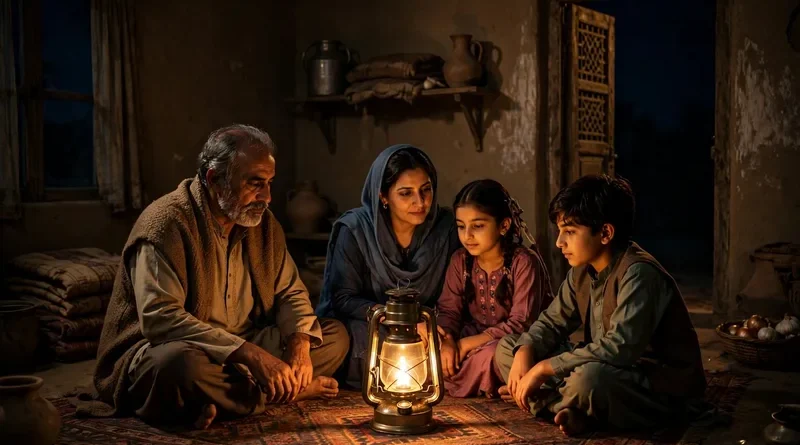
Assalam-o-Alaikum, my dear readers! I hope you are well, and your family is happy and healthy. Kal dopahar 2 baje bijli gayi to meri nani ne kaha: “atta ghoondna bhi mushkil ho gaya.” Ye baat to har ghar ne mehsoos ki hai. Aur bijli jaate hi garmi aur machhar dono hamla kar dete hain — ye takleef to har Pakistani ki apni kahani hai. Dekhiye, mein WAPDA ki engineer nahi — bas aik aam Pakistani hoon jise load shedding ki takleef khud mehsoos hoti hai, aur pankhay ke baghair garmi to sab jaante hain. To aaiye, load shedding in Pakistan ki is kahani ko aasaan lafzon mein samajhte hain.
The short answer is this: load shedding happens when there is not enough electricity for everyone who wants it, or when the system cannot pay for the electricity it needs. Think of it like a water tank in your street. If the tank has little water but many homes want water at the same time, the water must be shared by turns. Load shedding is the same idea. The power is shared by turns, area by area.

But here is the strange part. Pakistan has many power plants. So why do we still face load shedding? The answer is not one thing. It is a mix of money problems, old wires, theft, and very hot summers. Let me explain each one.
Why Does Load Shedding Happen in Pakistan?
Why does load shedding happen in pakistan even though we have big power plants? Because having power plants is not enough. A power plant is like a factory. It needs fuel to run. It needs money to buy that fuel. And the electricity it makes needs good wires to reach your home. If any one of these three fails, you get load shedding.
What causes load shedding in pakistan is really a chain of problems. Let me open each link of this chain for you.
The Big Problem: Circular Debt (Unpaid Bills Piling Up)
The biggest reason has a funny name: circular debt. Let me explain it with a small story. Imagine you buy milk from a shop every day but you do not pay. The shopkeeper cannot pay the milk company. The milk company cannot pay the farmer. Soon, the farmer stops giving milk. The whole chain stops. This is circular debt.
In our power system it works like this. Many people do not pay their bijli bills fully, and some steal electricity. The power companies then do not have enough money. So they cannot pay the power plants. The power plants cannot buy fuel. So they make less electricity, or they stop. And then we get load shedding.
This debt keeps growing in a circle, which is why it is called circular debt. Wikipedia’s article on load shedding in our country notes that circular debt is the main cause of our power cuts, and that our installed power capacity was over 46,000 MW by 2025 — yet load shedding continued because the money chain was broken. So the problem is not a lack of power plants. The problem is money.
Is the Government Trying to Fix Circular Debt?
There is new news about this money problem. On October 28, 2026, the federal government completed a Rs930 billion Islamic financing deal to reduce circular debt in the power sector. The Central Power Purchasing Agency, called CPPA-G, told the power regulator about the deal.
CPPA-G also reported Rs183.4 billion in relief for consumers. It said the savings came from new settlement deals with power producers. Profit reported the deal.
Old Wires and a Tired Grid Cause Load Shedding in Pakistan
The second reason is our old wires. Think of wires like old roads. Even if you have many trucks full of goods, they cannot reach the market if the roads are broken and narrow.
Pakistan’s power grid — the network of big wires that carries electricity from plants to cities — is old in many places. It cannot always carry all the power to the homes that need it. Some plants are in the south, but the big demand is in the north, and the wires between them are not strong enough.
Theft, Losses, and Hot Summers Make Load Shedding in Pakistan Worse
The third reason is theft and loss. In many areas, people take electricity without paying, using illegal wires called kundas. Also, the old wires waste a lot of power on the way. When the company loses money to theft and waste, it has less money to buy fuel and fix the wires. The circle of problems grows bigger.
The fourth reason is our hot summer. In June and July, every home turns on fans, coolers, and ACs at the same time. The demand for electricity jumps very high. When demand jumps but supply stays the same, the gap grows, and a bigger gap means more load shedding. This is why load shedding is always worse in summer and better in winter. I write about daily life problems here at Pak Unfiltered because I know how hard these hot, dark hours are for you and your children.
What Can Your Family Do?
Dear friends, we cannot fix the whole system alone. But we can make our own homes smarter. Here are simple things every family can do:
- Use LED bulbs. They use much less bijli than old bulbs.
- Switch off lights and fans when you leave the room.
- Avoid using heavy things like the iron and water pump in the evening, when everyone else is also using power.
- Keep a UPS or a small solar panel if you can afford it, for fans and lights during load shedding hours.
- Pay your bijli bill on time. When honest people pay, the system gets stronger.
These steps will not end load shedding. But they will make your home cooler, your bills smaller, and your life easier. To understand how fuel prices also push your bijli bill up, read my simple guides on petrol price changes and what they mean for your pocket and weekly inflation and what gets cheaper or costlier.
Frequently Asked Questions
Q: If Pakistan has enough power plants, why is there still load shedding?
A: Because plants need fuel and money to run, and the wires must be strong enough to carry the power. Money problems and old wires stop the power from reaching you.
Q: What is circular debt in simple words?
A: It is unpaid money going round in a circle. People do not pay bills, so companies do not get money, so they cannot pay power plants, so plants cannot buy fuel.
Q: Is load shedding worse in summer?
A: Yes. In summer, everyone uses fans and ACs together, so demand jumps high. More demand with the same supply means more load shedding.
Dear friends, now you know the simple truth. Load shedding happens because of a broken money chain, old wires, theft, and hot summers. Knowing the reason is the first step, and smart habits at home are the second.
Take care.
Do you have a question about bijli or load shedding in your area? Please write it in the comments below. I read every comment, and I will try my best to answer you.


